
Home FMCG ERPNext Implementation

FMCG ERPNext Implementation

Connecting Procurement, Manufacturing, Inventory, Sales & Finance

Executive Summary

An FMCG business needed to bring purchasing, inventory, manufacturing, sales and finance operations onto a single ERP platform. The implementation focused on connecting high-volume item transactions, multiple warehouses, batch-controlled inventory and manufacturing into one traceable process.
The central objective was to replace disconnected operational activities and manual reconciliation with a consistent ERP transaction flow—from procurement and raw-material receipt through production, finished-goods inventory, sales and accounting.

Business Background

The business operated with a high volume of item-level transactions, multiple warehouses, batch-controlled inventory and regular movement of raw materials and finished goods. Manufacturing was an integral part of the operation: raw materials were consumed in production and converted into finished products for sale and distribution.
The key requirement was to connect these activities rather than manage purchasing, production, inventory and sales as separate processes.
Business

FMCG

Platform

ERPNext

Core Focus

End-to-End Transaction Flow
ERPNext-s-1
ERPNext-s-2
ERPNext-s-3
ERPNext-s-4

Bottlenecks & Pain Points

Difficulty getting a clear picture of actual stock across different warehouses.
Manual dependency for tracking purchase, production and sales transactions.
Differences between physical stock and system records.
Difficulty tracking batch-wise raw-material and finished-goods inventory.
Limited visibility of raw-material availability against production requirements.
Manual tracking of material consumption during production.
Difficulty identifying actual production output against planned quantities.
Purchase, manufacturing, inventory and finance teams working with disconnected information.
Difficulty tracing finished goods back to their production batch and consumed materials.
Limited visibility of pending procurement, production and sales transactions.
Manual reconciliation between operational transactions and accounting.
Lack of a consistent process for inter-warehouse stock movement.
Management reports requiring manual consolidation from different sources.

The challenge was therefore not simply to introduce an ERP system, but to establish a connected transaction flow from procurement and raw-material receipt through production, finished-goods inventory, sales and accounting.

The Requirement

The objective was to create a connected process where procurement, manufacturing, inventory, sales and finance would work on the same transactional data.
Business Cycle ERPNext Transaction Flow
Procurement Cycle Material Requirement → RFQ → Purchase Order → Purchase Receipt → Purchase Invoice → Payment
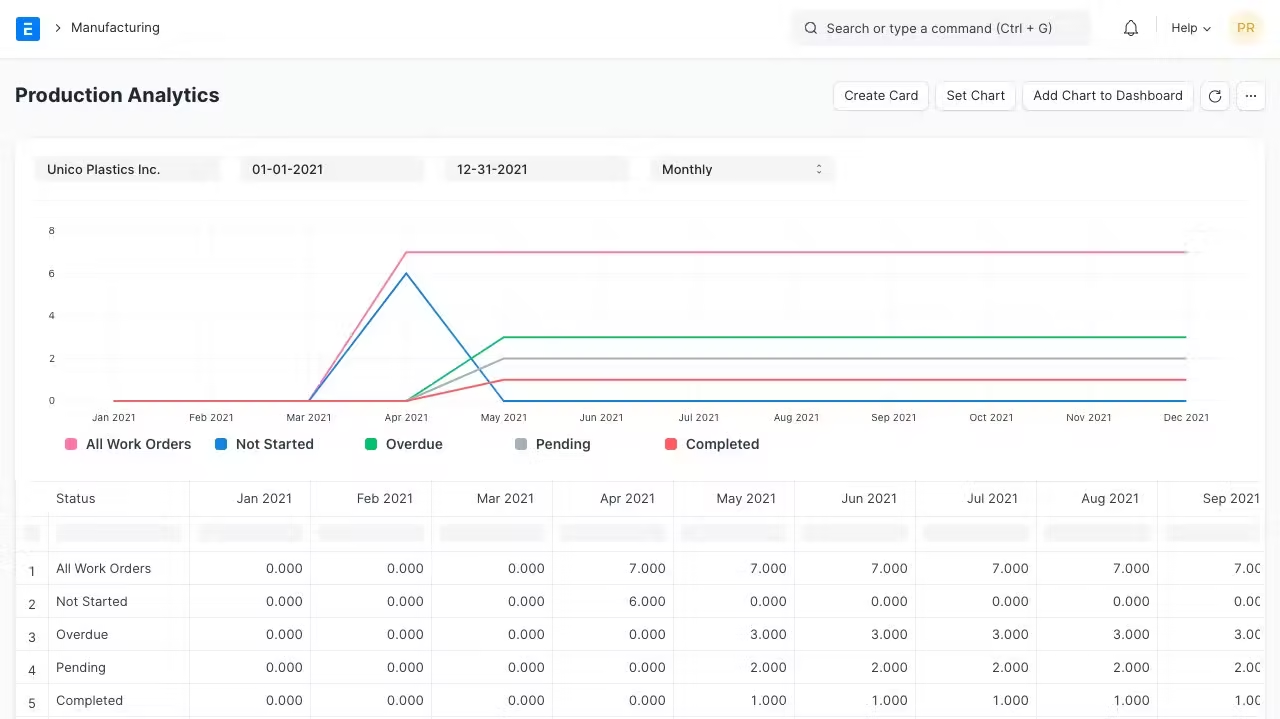
Manufacturing Cycle Production Requirement → BOM → Material Availability → Work Order → Material Transfer/Consumption → Manufacturing → Finished Goods Receipt → Finished Goods Stock
Sales Cycle Sales Order → Stock Availability → Delivery → Sales Invoice → Payment
Inventory movement between warehouses was also required to remain traceable across the above processes.
ERPNext-s-5
ERPNext-s-6
What We Worked On
Item and Item Group structure
Raw material, packing material and finished goods classification
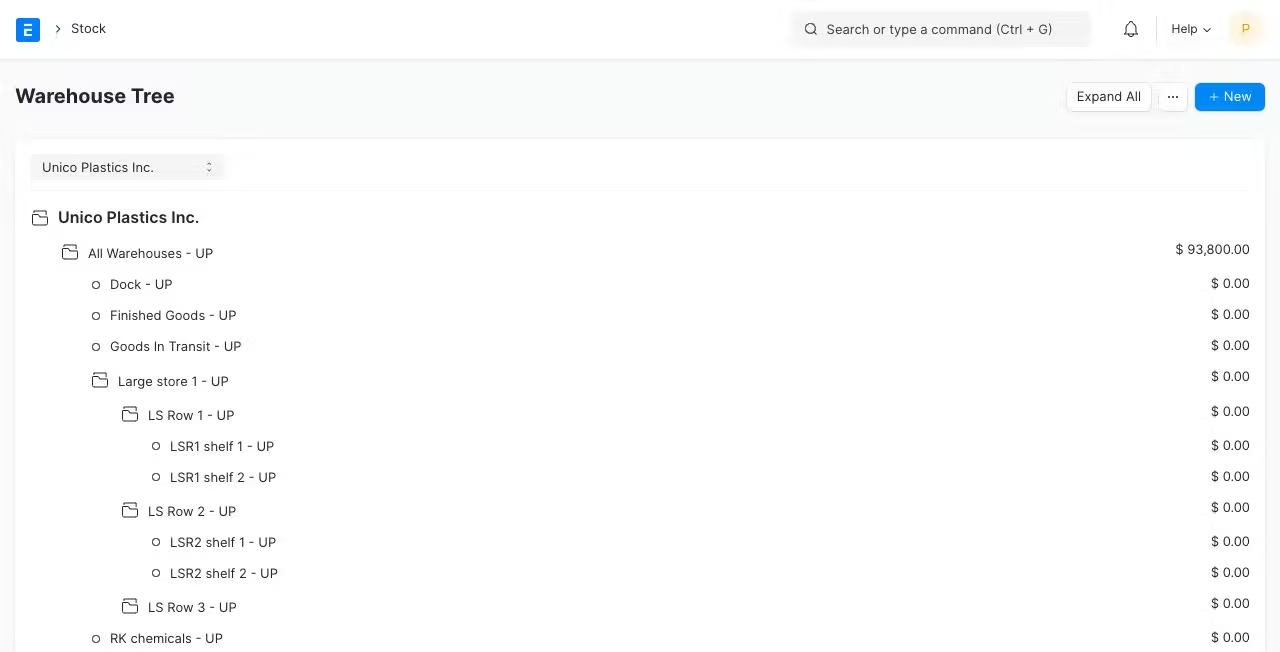
Multiple warehouses and warehouse hierarchy
Batch-wise inventory
BOM creation for finished products
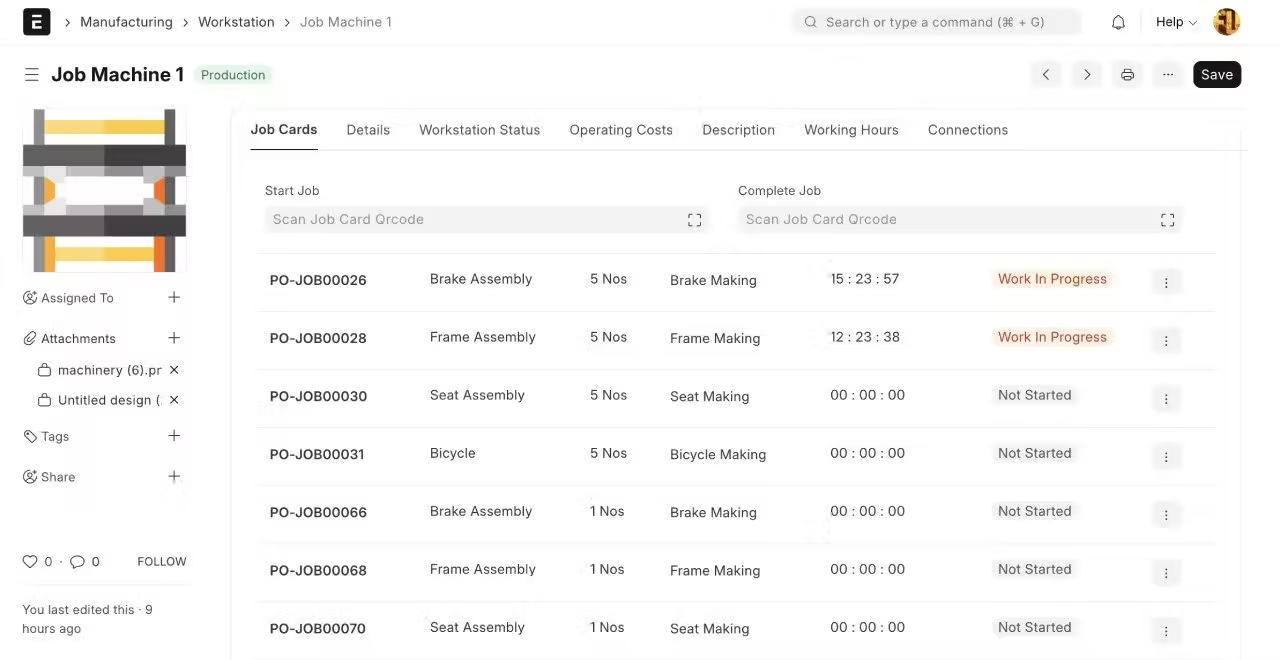
Manufacturing and production transactions
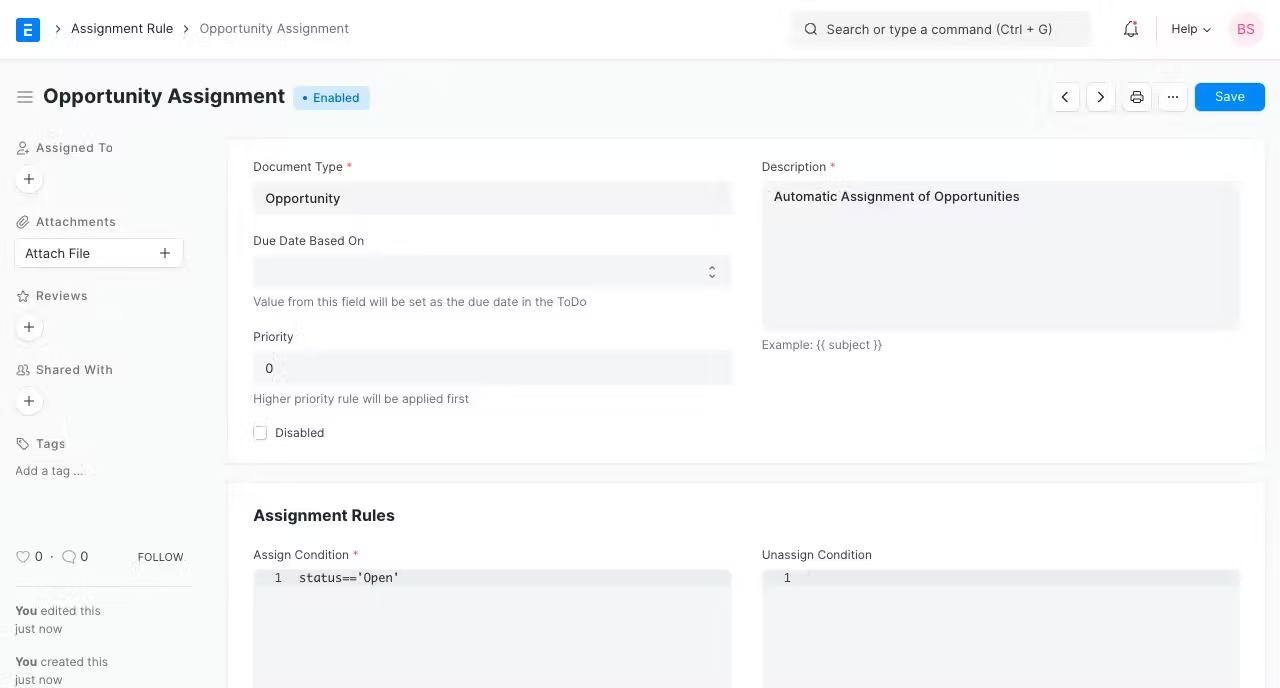
Work Orders and production planning
Raw-material consumption against production
Finished-goods receipt after production
Production-related stock movement
Purchase and sales pricing
Purchase Orders and Purchase Receipts
Stock transfers between warehouses
Sales Orders and Delivery Notes
Sales Invoices and payment flow
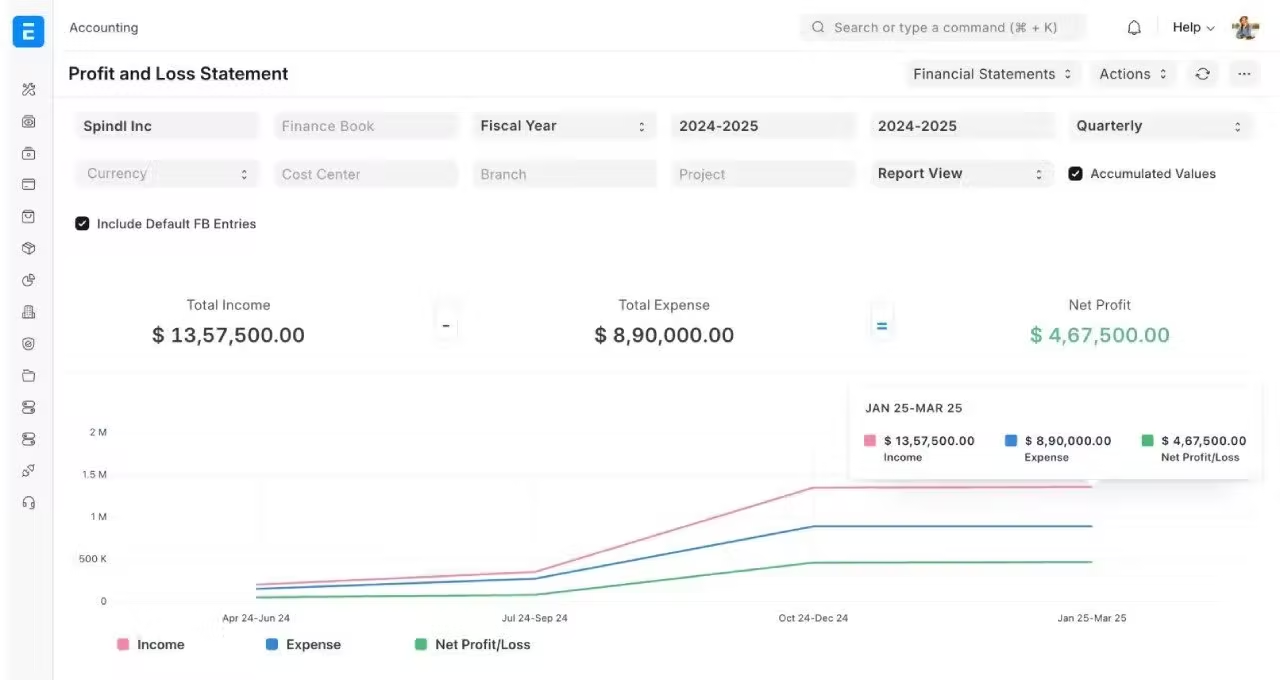
Stock and accounting integration
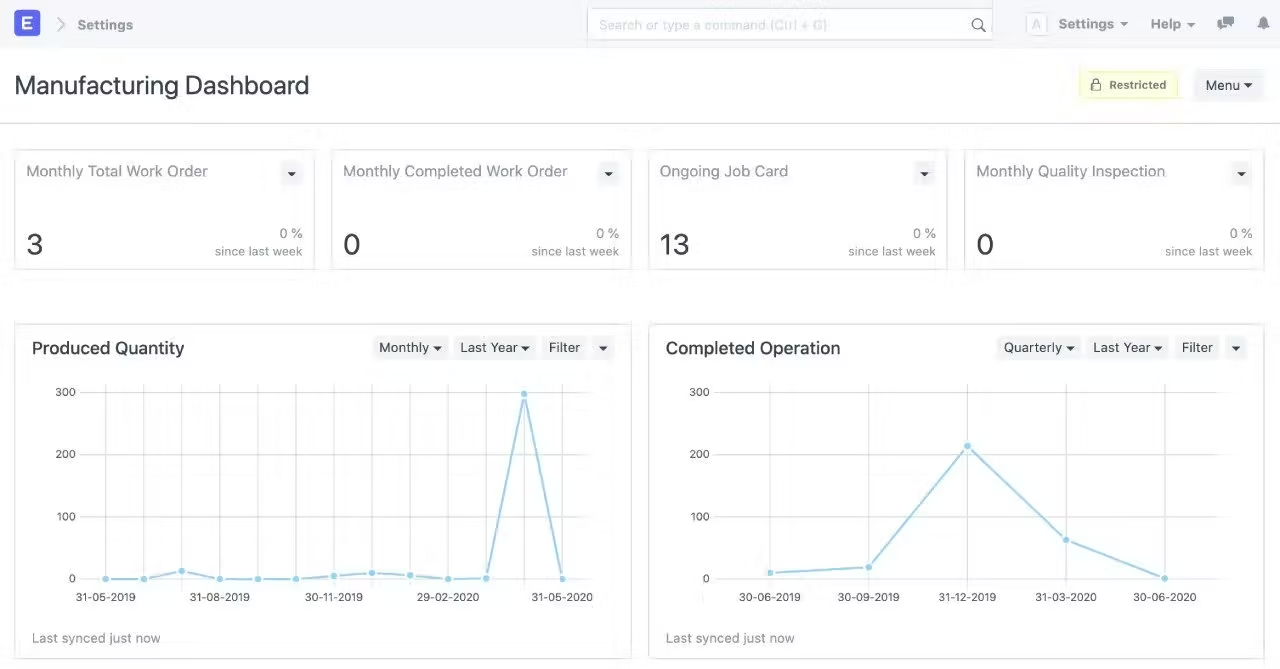
Inventory, manufacturing and operational reporting
Practical Implementation Approach
A major focus was ensuring that manufacturing was connected with inventory rather than treated as a separate activity.

When a production requirement was raised, the BOM defined the raw materials required for the finished product. Material availability could then be checked before production. Raw materials were transferred or consumed against the production process, and the resulting finished goods were received into the appropriate warehouse.

Raw Material → Production → Finished Goods → Batch → Sales

On the procurement side, the Purchase Receipt updated the actual stock position, while the Purchase Invoice handled the corresponding financial transaction.
On the sales side, the Delivery reduced finished-goods inventory and the Sales Invoice captured the financial impact.
Inter-warehouse movements were also handled through ERP transactions so that stock location remained visible rather than relying on manual registers.

Outcome

The implementation provided a common operational system for procurement, manufacturing, inventory, sales and finance.
Better visibility of raw-material and finished-goods stock.
Improved tracking of batch-wise inventory.
Better visibility of material availability for production.
Structured tracking of raw-material consumption and production output.
Traceability between production batches and finished goods.
Clearer visibility of stock movement between warehouses.
Better connection between operational transactions and accounting.
Reduced dependency on manual reconciliation and consolidated reporting.
ERPNext-s-7

Key Improvement

The key improvement was not simply replacing manual records with ERP screens. The business processes were structured around actual ERP transactions, creating a connected flow from procurement → raw-material inventory → manufacturing → finished goods → sales → accounts.
ERPNext-s-8