
Home Manufacturing ERPNext Implementation

Manufacturing ERPNext Implementation

Connecting Multi-Level Production, Shop Floor, Quality, Costing & Inventory

Executive Summary

A manufacturing organisation wanted to move its production operations into ERPNext and establish better control over raw materials, production activities, work-in-progress and finished goods. Because the production environment involved multiple operations and sub-assemblies, a simple single-level BOM and Work Order setup was not sufficient.
The implementation therefore focused on representing the real shop-floor process in ERPNext, including multi-level production, operation-wise activities, material consumption, quality checks, scrap and rejection, subcontracting, in-transit inventory and production costing.

Business Background

The organisation operated a production environment involving multiple manufacturing operations and sub-assemblies. The business required stronger control over raw materials, work-in-progress and finished goods, along with transaction-level visibility of what was happening at each stage of production.
The key requirement was to make ERPNext reflect actual shop-floor activity rather than relying on manual production updates and disconnected inventory records.
Business

Manufacturing

Platform

ERPNext

Core Focus

End-to-End Production Control
ERPNext-s-7
ERPNext-s-6
ERPNext-s-1
ERPNext-s-4

Bottlenecks & Pain Points

Difficulty maintaining multi-level BOMs and sub-assemblies.
Lack of clear visibility of material required versus material actually consumed.
Production status dependent on manual updates from the shop floor.
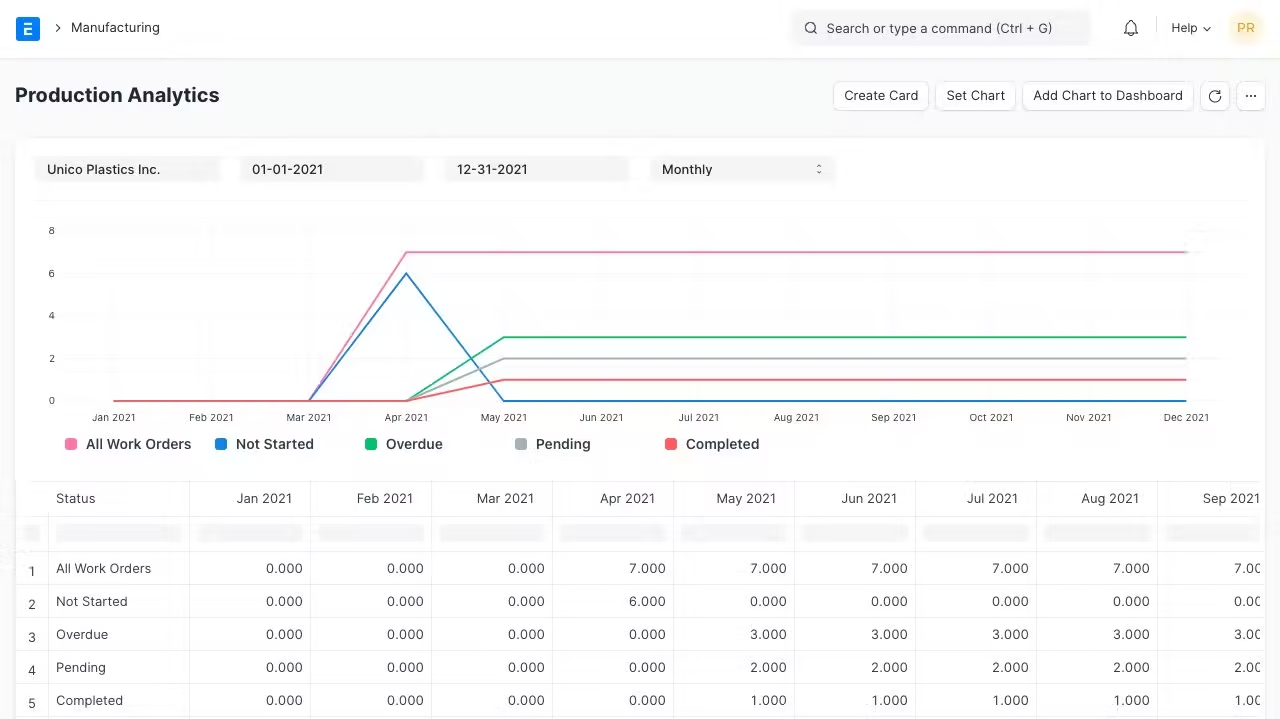
Difficulty tracking operation-wise production progress.
Raw material, WIP and finished goods lacking clear transaction-level traceability.
Scrap and rejection not being consistently accounted for.
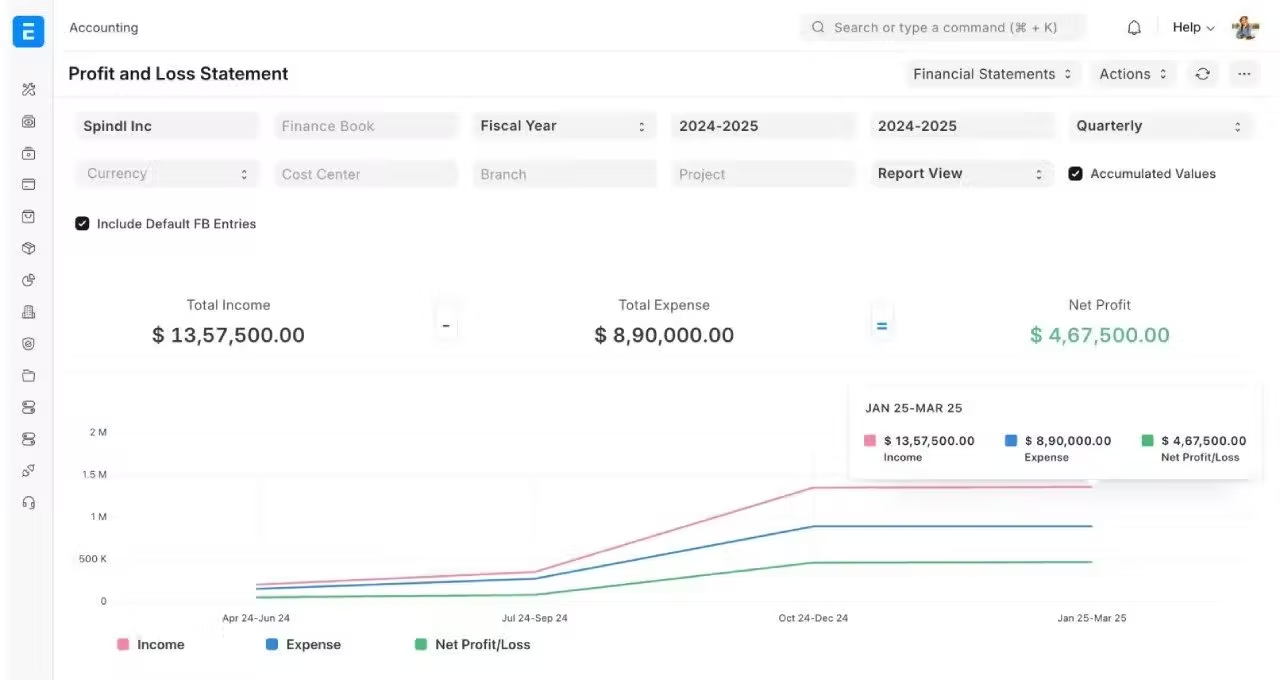
Difficulty connecting production activity with actual manufacturing cost.
Material issued for subcontracting requiring separate tracking.
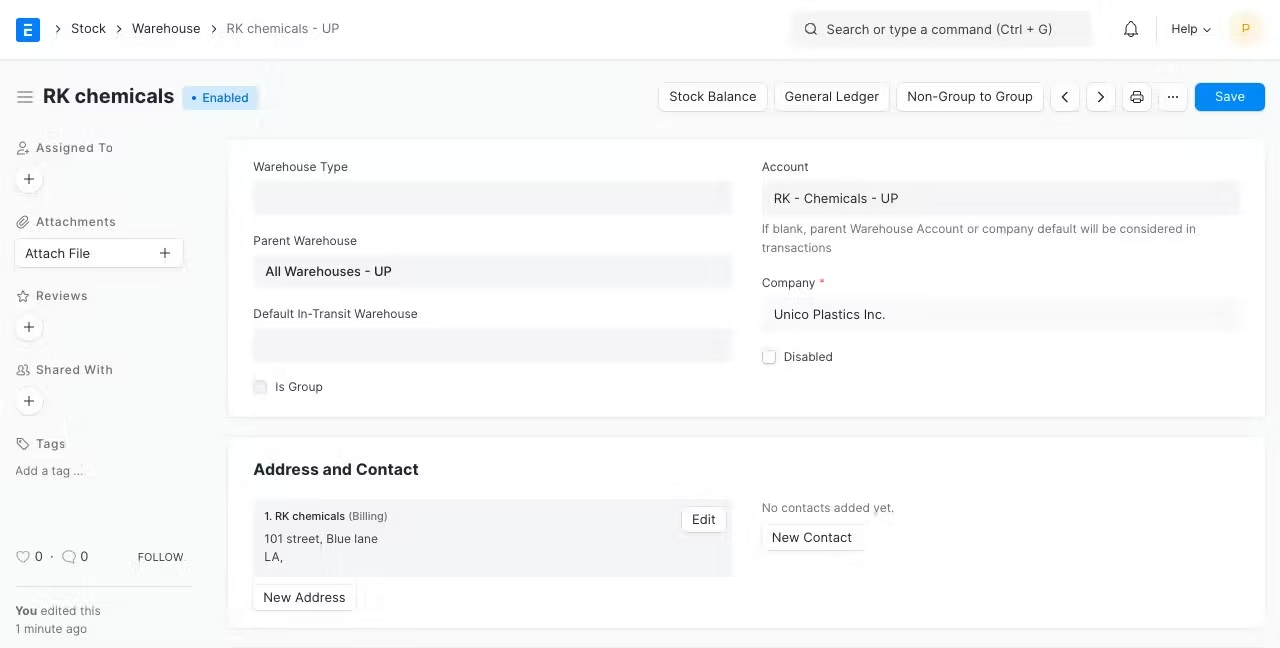
Material physically moved between locations but not immediately received at the destination.
Production and inventory teams needing different views of the same stock movement.
Quality checks required at specific stages rather than only at the end of production.
The key challenge was to make the ERP reflect what was actually happening on the shop floor while maintaining a consistent inventory and accounting trail.

The Requirement

The requirement was to connect the complete production process while maintaining visibility of material consumption, production activity, quality, scrap and manufacturing cost.
Inventory movement between warehouses was also required to remain traceable across the above processes.
ERPNext-s-8
What We Worked On
Multi-level and nested BOMs
Sub-assembly BOMs
Operations and Routing
Workstations
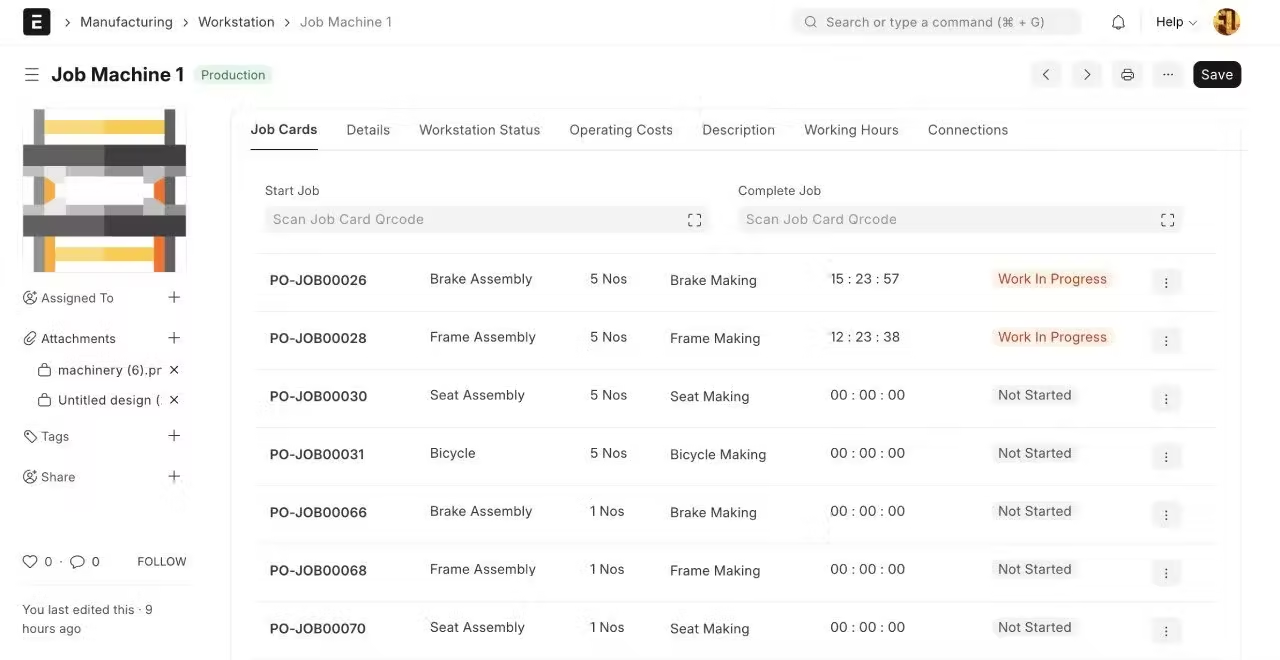
Operation-wise production activities
Work Orders
Job Cards
Material Transfer for Manufacture
Material Consumption
Manufacture Stock Entries
Finished Goods receipt
Scrap and rejection
Quality Inspection
Production Planning
Manufacturing reports
Subcontracting

Another area involved sending raw material to an external subcontractor and receiving the processed material back. The process required visibility of material that remained part of the company’s inventory even while it was physically outside the main premises.

Raw Material Issued → Subcontractor Stock → Material Consumption → Processed / Finished Material Received Back

Where the Process Became More Interesting

The standard production flow was not sufficient for every business situation. One practical requirement involved material physically arriving at the premises against a delivery challan, while the business did not want that material to become available for production consumption until the corresponding invoice was received.

Physical Receipt → Pending Documentation → Released for Consumption → Production

The solution kept such material separately identified until it was formally released for consumption. This prevented physically available material from being treated as production-available stock prematurely.

Inter-Plant / In-Transit Stock

For inter-location movement, stock could leave the source warehouse but take time to reach the destination. Instead of immediately considering the quantity as available at the destination, the process introduced an intermediate in-transit stage.

Source Stock → In Transit → Destination Stock

This provided clearer visibility of stock that had left the source but had not yet been received at the destination. The associated e-way bill requirement was also considered as part of the movement process.

Production Cost & Variance

A key objective was to connect production transactions with costing and compare what was expected from the BOM with what actually happened during production.
This approach gives management a more meaningful view of production cost than simply looking at the BOM valuation, because it considers actual consumption, production activity, scrap or rejection and additional manufacturing costs.
Stage Costing Perspective
1 BOM / Expected Consumption
2 Actual Material Consumption
3 Production Activity
4 Scrap / Rejection
5 Additional Manufacturing Cost
6 Finished Goods Cost

Outcome

Better traceability from raw material through production to finished goods.
Improved control over multi-level production and sub-assemblies.
Clearer visibility of operation-wise production progress.
Better tracking of expected versus actual material consumption.
More consistent accounting for scrap and rejection.
Improved visibility of material held by subcontractors.
Clearer tracking of stock moving between locations through an in-transit stage.
Quality checks incorporated at relevant stages of production.
Better linkage between production transactions and manufacturing cost.
A more reliable transaction trail for production and inventory reporting.

Implementation Philosophy

The implementation approach was to keep the process as close to standard ERPNext as possible and introduce customization only where the actual business process could not reasonably be handled through standard functionality.
Standard ERPNext First → Identify Business Gaps → Targeted Customization → Controlled Process
ERPNext-s-2

Key Improvement

The implementation moved manufacturing from manually tracked activity toward a connected, transaction-driven process where production, inventory, quality and costing could be viewed together.
ERPNext-s-5